OK, thank you for the clarification. I believe you understood my point: a signal mastered to a -1.0 dBTP limit is generally safe for streaming or platform-based normalization. However, when a track is purchased—on platforms like Beatport, Bandcamp, Apple, Amazon or so on—it can be downloaded in various codecs. This creates a real challenge for most artists, as the source file is typically a 24-bit/44.1 kHz WAV, yet there is usually no way to provide a separate, codec-specific master for each format offered by these platforms.
Yes, I understood. And I tried to explain, that even the various codecs are already taken into account, when the decision for -1 dBTP was made. In short: the very popular recommendation of -14 LUFS at -1 dBTP is a generalized safe space. Most pop/rock/electronic productions will never exceed 0 dBTP in whatever codec on the end user's device. Orchestral and similar productions will be safe with -20 LUFS (for more dynamics) at -1 dBTP. As any generalized range, it has its limits. The more you compress towards the digital limit, the more likeliness for the analog signal to go over the capacity of the hardware. See last paragraph.
If I’ve understood you correctly, the quality of the listener's playback device then becomes the deciding factor in whether or not we hear artifacts caused by clipped peaks
Yes and no. I'm hesitating, because I'm not sure, wether you are into the technical side of all this. Please don't feel offended when I go into detail over this!
In the digital realm, we only have sample points. each one representing the amplitude at that exact moment in time. Between them is nothing. No information. The term for this is "discrete values". That is a property of the digital realm only. In the analog realm, there is always a continuous signal. If you could zoom in on a sound, you would never see emptiness, like in the digital realm, there always is a value. It is the task of the DAC to reconstruct a continuous signal from the few sample points. It does so using an algorithm. The result is a curve of values, no matter how far you would zoom in. The example image shows the sample points of the digital realm as black squares and the reconstructed continuous signal from the DAC in grey. The signal will always be curved. And if we assume, that the top 2 sample points are at 0 dBFS, it becomes clear that while this is totally valid in the digital realm, the analog signal in grey will exceed this digital limit. That's ISP, and it is measured in dBTP. However, this is just a propability. A true peak meter does not know the exact specifications of all DACs out there. When it shows 0 dBTP, it is actually saying "around 0 dBTP. It could be -0.5 or +0.3 just as well, depending on the used hardware. But more important: The grey curve is what exists in the analog realm, it is the signal that leaves the DAC for the amplifier and speakers. And that signal doesn't change. It is exactly that signal. Now, how does analog "clipping" occur? It is important to understand, that it does not occur in the DAC! The grey line will never be flattened or something like that! What happens is that the hardware has some voltage and power. Let's say, it has a 5 Volt system, which means it can raise or lower voltage between 0 and 5 Volt. The DAC is referencing that scale. But, at that peak of the example image, it tells the amp "go up to 6 Volt". The amp doesn#t have that voltageand so it stays at 5 Volt for the whole time between the two sample points instead of gradually rising and falling. That would be analog clipping. It sounds like high frequency noise if it happens often. You don't notice it if it happens once or twice. in allcases it is a limitation of the analog hardware rather than a corrupted signal. This is really important. The signal is totally fine and intact, the hardware just can't follow. some DACs reference lower voltage ranges to compensate, so you don't even run into analog clipping, for example a 3 Volt range on a 5 Volt amp. That's why it is so difficult to say anything definitive. In theory your question would be answered "yes", but in practice it is rarely occuring.

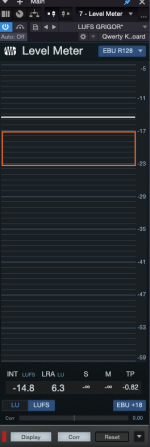
In this context—specifically for electronic music (leaning toward trance)—would you consider it more advisable to master to -1.5dBTP, while aiming for a loudness level around -10 LUFS (rather than -6 LUFS) and attempting to maintain a dynamic range of approximately DR9?
This is such a "highly compressed towards the top end" situation. Disregard codecs, this dense music mix will make it very likely to have a large overshoot. I would even recommend -2 dBTP to make sure. This not because of the -10 LUFS goal, but because of the very small dynamic range of 9 dB.
But please, consider that you might be too obsessed. You will not prevent all situations, where the hardware hits its physical limits. For example, even at your current -1.5 dBTP it is still a valid master that most of your audience will enjoy without any noticable distortion.