Surf.Whammy
Member
This is my perspective on reference tuning pitch; and I think it's important to be consistent, because even when a different reference tuning pitch is used, people still hear most popular music tuned to "Concert A" (440-Hz), which at least metaphysically violates the rule that if there is a piano in a house where is a child, then the piano needs to be kept in tune to "Concert A" (440-Hz) to avoid teaching the child to hear wrong notes as being somehow "normal".
Whether perfect pitch and relative pitch can be taught or influenced by the environment is another matter; but I think keeping instruments tuned certainly does no harm.
"Concert A" (440-Hz) is the US standard reference tuning pitch and has been for nearly a century.
The federal government broadcasts the standard 440-Hz tuning pitch (A4 above C4 in scientific pitch notation) from its radio stations, WWV and WWVH, once per hour so musical groups, orchestras, choirs, Big Band, Ska, and Polka ensembles, and Miley Cyrus can tune.
Some of the Europeans prefer a different reference tuning pitch, perhaps because older orchestral instruments are wearing out and do not tune so well to the standard 440-Hz reference tuning pitch.
For example, the London Symphony Orchestra (LSO) sampled-sound libraries in earlier versions of NOTION and Studio One were not tuned to 440-Hz, which required manually setting the reference tuning pitch to 440-Hz when standard reference tuning pitch compatibility was desired.
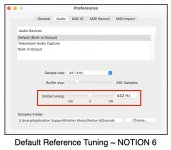
This was changed from 432-Hz for earlier versions of Studio One to "Concert A" (440-Hz) in Studio One 7 and perhaps a few previous versions; but the factory default for NOTION 6 is 442-Hz, probably because the London Symphony Orchestra (LSO) tunes that way, which then maps to its digitized sampled-sound libraries being tuned accordingly.
In a related way--but for different purposes--songs occasionally are recorded in lower or higher reference tuning pitches as well as slower or faster tempos to make instruments and singing sound "better", where older electric guitars and basses tend to have tuning variations even when properly intonated and action-adjusted; hence tuning them to different reference tuning pitches can improve the way the notes are perceived.
If you do a Google search on this, then you will find one of my detailed posts to the Notion Music Forum in 2012 on this mostly unexpected, unintuitive, and somewhat disturbing fact, although "disturbing" primarily because it took me a while to discover why notes sounded out of tune.
There are reasons to use different reference tuning pitches, of course; but if you want your songs to be tuned the same way as most songs you hear on the radio, iPhone, and web, then use "Concert A" (440-Hz).
In fact, one of the first and most important things George Martin did when he became the Beatles producer was to require them to tune their guitars, which is heard most easily when you listen to the pre-Martin "Decca audition" recordings with Pete Best playing drums without the precise timing of Ringo Starr.
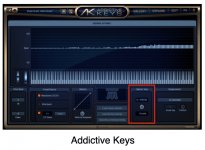
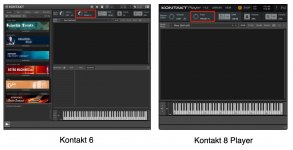
Most but not all VSTi virtual instruments have settings for the reference tuning pitch and by factory default are set to "Concert A" (440-Hz); but this is not the case universally, where for example there is no single place in SampleTank 4 to set the global reference tuning pitch, which must be done individually as is the case with Studio One, although I am reasonably confident that Studio One defaults to "Concert A" (440-Hz), if only because most of the VSTi virtual instrument engines use 440-Hz as their factory defaults.
I do not set every instrument to 440-Hz in Studio One; and have had no problems in this regard; hence I think Studio One uses "Concert A" (440-Hz) as its factory default reference tuning pitch.
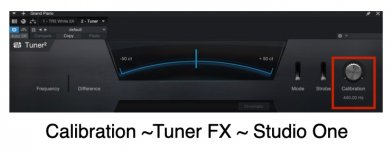
Yet, there is a way to adjust the reference tuning pitch for each instrument as a separate activity via the Tuner FX native Studio One effects control, should this be necessary, which apparently is the same strategy SampleTank (IK Multimedia) and Opus (EW ComposerCloud+) provide.
For reference, I looked for a global reference tuning setting in Studio One, SampleTank 4, and a few other products; but did not find any. This leads me to infer that "Concert A" (440-Hz) is so ubiquitous at this time in the 21st century everything naturally defaults to "Concert A" (440-Hz).
It's also useful to know that IK Multimedia is based in Italy and tends to consider "Middle C" to be C3 rather than C4 in scientific pitch notation, which can be a bit confusing if you pay attention to the "C" note names in the Graphic User Interface (GUI) mini-keyboard for SampleTank 4.
[NOTE: I think this is accurate information, and I was able to verify most of it; but if anyone has better information, then please reply so I can update my observations.]
Whether perfect pitch and relative pitch can be taught or influenced by the environment is another matter; but I think keeping instruments tuned certainly does no harm.
"Concert A" (440-Hz) is the US standard reference tuning pitch and has been for nearly a century.
The federal government broadcasts the standard 440-Hz tuning pitch (A4 above C4 in scientific pitch notation) from its radio stations, WWV and WWVH, once per hour so musical groups, orchestras, choirs, Big Band, Ska, and Polka ensembles, and Miley Cyrus can tune.
Some of the Europeans prefer a different reference tuning pitch, perhaps because older orchestral instruments are wearing out and do not tune so well to the standard 440-Hz reference tuning pitch.
For example, the London Symphony Orchestra (LSO) sampled-sound libraries in earlier versions of NOTION and Studio One were not tuned to 440-Hz, which required manually setting the reference tuning pitch to 440-Hz when standard reference tuning pitch compatibility was desired.
This was changed from 432-Hz for earlier versions of Studio One to "Concert A" (440-Hz) in Studio One 7 and perhaps a few previous versions; but the factory default for NOTION 6 is 442-Hz, probably because the London Symphony Orchestra (LSO) tunes that way, which then maps to its digitized sampled-sound libraries being tuned accordingly.
In a related way--but for different purposes--songs occasionally are recorded in lower or higher reference tuning pitches as well as slower or faster tempos to make instruments and singing sound "better", where older electric guitars and basses tend to have tuning variations even when properly intonated and action-adjusted; hence tuning them to different reference tuning pitches can improve the way the notes are perceived.
If you do a Google search on this, then you will find one of my detailed posts to the Notion Music Forum in 2012 on this mostly unexpected, unintuitive, and somewhat disturbing fact, although "disturbing" primarily because it took me a while to discover why notes sounded out of tune.
There are reasons to use different reference tuning pitches, of course; but if you want your songs to be tuned the same way as most songs you hear on the radio, iPhone, and web, then use "Concert A" (440-Hz).
In fact, one of the first and most important things George Martin did when he became the Beatles producer was to require them to tune their guitars, which is heard most easily when you listen to the pre-Martin "Decca audition" recordings with Pete Best playing drums without the precise timing of Ringo Starr.
Most but not all VSTi virtual instruments have settings for the reference tuning pitch and by factory default are set to "Concert A" (440-Hz); but this is not the case universally, where for example there is no single place in SampleTank 4 to set the global reference tuning pitch, which must be done individually as is the case with Studio One, although I am reasonably confident that Studio One defaults to "Concert A" (440-Hz), if only because most of the VSTi virtual instrument engines use 440-Hz as their factory defaults.
I do not set every instrument to 440-Hz in Studio One; and have had no problems in this regard; hence I think Studio One uses "Concert A" (440-Hz) as its factory default reference tuning pitch.
Yet, there is a way to adjust the reference tuning pitch for each instrument as a separate activity via the Tuner FX native Studio One effects control, should this be necessary, which apparently is the same strategy SampleTank (IK Multimedia) and Opus (EW ComposerCloud+) provide.
For reference, I looked for a global reference tuning setting in Studio One, SampleTank 4, and a few other products; but did not find any. This leads me to infer that "Concert A" (440-Hz) is so ubiquitous at this time in the 21st century everything naturally defaults to "Concert A" (440-Hz).
It's also useful to know that IK Multimedia is based in Italy and tends to consider "Middle C" to be C3 rather than C4 in scientific pitch notation, which can be a bit confusing if you pay attention to the "C" note names in the Graphic User Interface (GUI) mini-keyboard for SampleTank 4.
[NOTE: I think this is accurate information, and I was able to verify most of it; but if anyone has better information, then please reply so I can update my observations.
]